How Much Does Flight School Cost in California? (2026 Guide)

If you’re researching how much flight school costs in California, you’re likely trying to answer three key questions:
- What’s the total investment?
- Why do prices vary so much?
- How can I finish faster without overspending?
In this guide, we break down real 2026 costs, explain what actually drives pricing, and show how structured training in Los Angeles can save both time and money.
The Short Answer: What Does Flight School Cost in California?
In 2026, typical flight training costs are:
- Private Pilot Certificate: $15,000 – $22,000
- Instrument Rating: $10,000 – $15,000
- Commercial Pilot Certificate: $30,000 – $45,000+
- Full Career Path (0 → Commercial/CFI): $70,000 – $100,000+
These are realistic ranges across California, especially in high-demand areas like Los Angeles.
But here’s the truth most schools don’t emphasize:
The biggest cost isn’t the hourly rate — it’s inefficiency.
Why Flight Training Costs Vary So Much
Two students at the same school can finish with completely different totals.
The difference usually comes down to:
1. Training Frequency
Students flying 3–5 times per week:
- Retain skills better
- Require fewer review lessons
- Finish faster
Students flying once a week:
- Relearn material constantly
- Need more hours
- Spend significantly more
2. Structure vs. “Pay-As-You-Go”
Unstructured training often leads to:
- Gaps between lessons
- Inconsistent instructor availability
- Repeated training blocks
Structured programs are designed to:
- Build skills progressively
- Reduce wasted hours
- Keep you on a clear timeline
3. Instructor Consistency
Switching instructors frequently slows progress.
A consistent instructor:
- Tracks your progress
- Builds on previous lessons
- Helps you move efficiently through training
The Hidden Cost Most Students Miss
Many students focus only on aircraft hourly rates.
But what actually increases cost is:
- Delays between lessons
- Repeating maneuvers
- Poor scheduling
- Lack of clear progression
Finishing faster = spending less overall
This is where the right training environment makes a major difference.
Training in Los Angeles: What to Expect
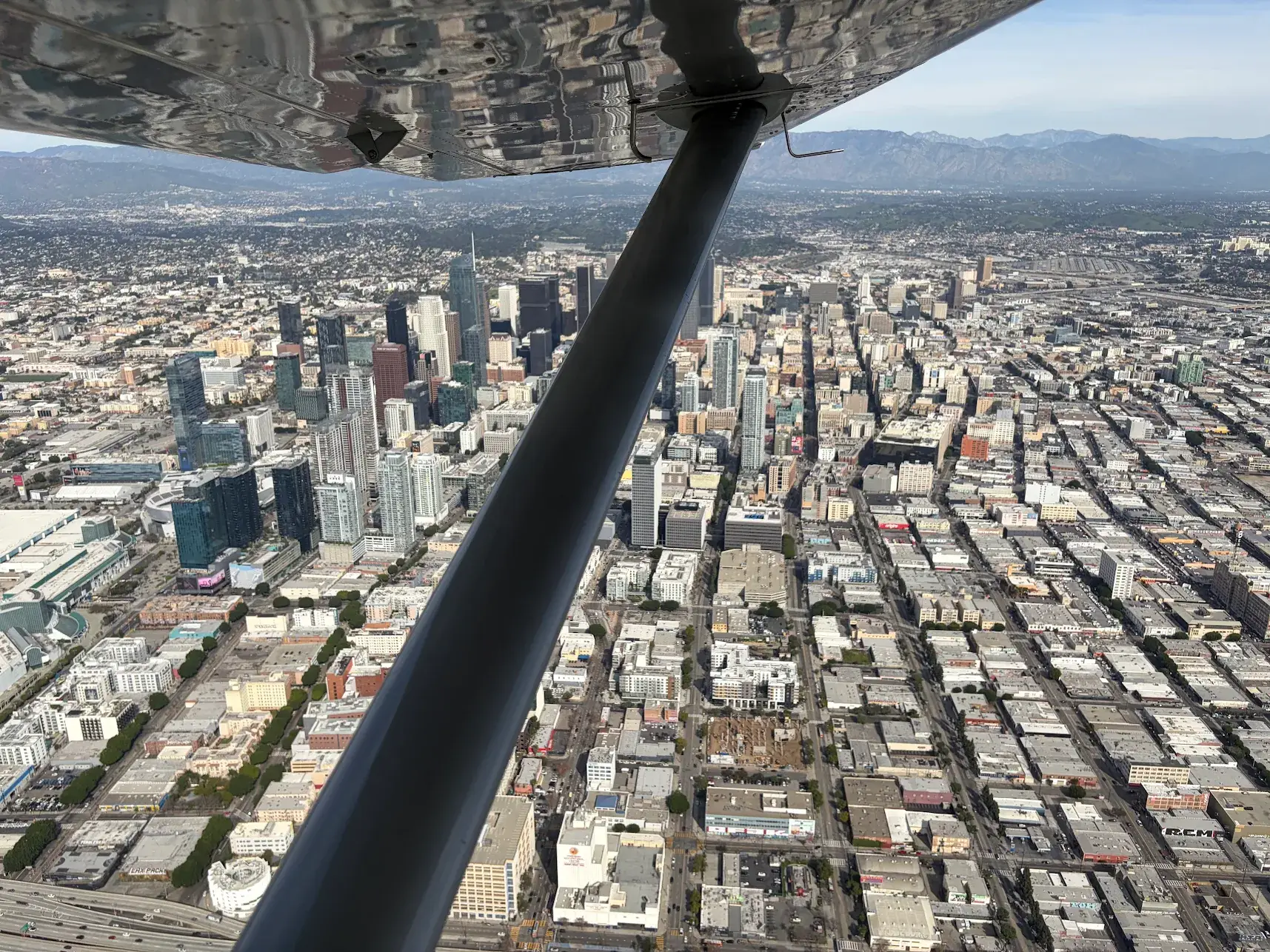
Los Angeles offers a unique training environment:
- Complex airspace (great for real-world experience)
- Consistent weather (fewer cancellations)
- High traffic (better communication skills)
While some assume busy airspace slows training, structured programs actually use it as an advantage — preparing students earlier for real-world flying.
How Essence Flight Academy Approaches Cost
At Essence Flight Academy, the focus is simple:
Train with precision. Progress with purpose. Finish efficiently.
Instead of stretching training over years, the goal is to:
- Minimize unnecessary flight hours
- Maintain consistent scheduling
- Build real proficiency from day one
This reduces total cost — even in a premium market like Los Angeles.
Typical Timeline (And Why It Matters)
Full-time, structured students often follow:
- 0–4 months: Private Pilot
- 4–8 months: Instrument Rating
- 8–12 months: Commercial Pilot
Faster progression means:
- Less skill loss
- Fewer repeated lessons
- Lower total cost
Students who train inconsistently often take 2–3x longer — and spend significantly more.
How to Budget for Flight Training
Before starting, you should:
- Plan for the full training path (not just private pilot)
- Set aside a financial buffer
- Commit to a consistent schedule
Most importantly:
Have a clear roadmap before your first flight
Common Mistakes That Increase Cost
Avoid these:
- Training only when convenient
- Choosing based on lowest hourly rate
- Not asking about program structure
- Switching instructors frequently
- Starting without a long-term plan
These are the biggest reasons students overspend.
Frequently Asked Questions
Is flight training more expensive in California?
Yes — but strong training environments and better weather often allow faster completion, which can offset the higher hourly rates.
Can I finance flight training?
Many students use financing, savings, or a combination. The key is planning ahead and understanding the full cost path.
What’s the cheapest way to become a pilot?
The cheapest path is usually:
- Training consistently
- Following a structured program
- Finishing as fast as possible
Your Next Step
Now you understand how flight school costs work in California:
- Costs vary based on structure and consistency
- Time is the biggest cost driver
- Efficient training reduces total investment
If you want a clear path forward, your next step is simple:
Schedule a Discovery Flight and experience training firsthand.
Or explore the full Pilot Training Programs to map out your career path.
Training in Los Angeles doesn’t have to be unpredictable — with the right structure, it becomes a fast, focused, and efficient journey into aviation.